




Figuarts ZERO Launches Its New STARTune Brand to START Your Collection! An Interview With the Sculpting Team!
START Your Collection With Figuarts ZERO!
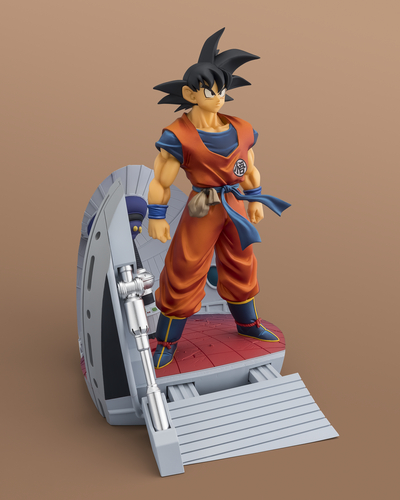
The new STARTune line by the Figuarts ZERO brand features statue-style figures that perfectly capture a character's charm and the world they inhabit! This brand aims to preserve the signature high quality and meticulous attention Figuarts ZERO puts into sculpting, painting, and world-building to help fans start an all-new collection with ease, all at an accessible price point.
Dragon Ball's first installment in this series is Figuarts ZERO [STARTune] Goku -Stepping Onto the Battlefield-, and it's now available for pre-order! The team responsible for this amazing figure is highly experienced in sculpting and has taken part in creating numerous Dragon Ball figures!
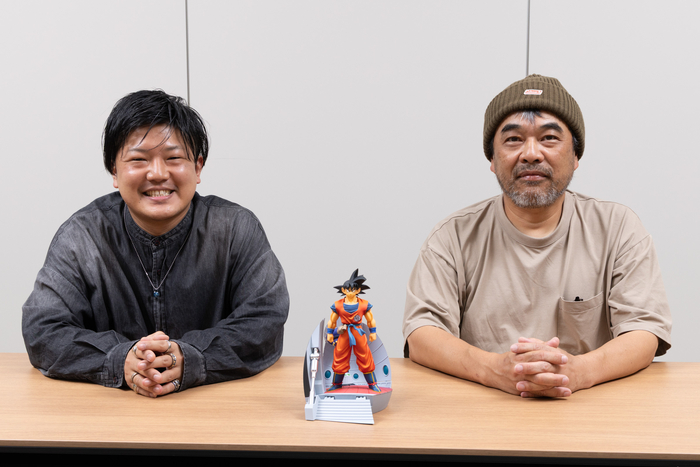
Does this new figure live up to Figuarts ZERO's standard? We had the chance to speak with the sculpting team to see if it still has the quality Figuarts ZERO is known for and to get a closer look at one of the painted sample figures!
We're going behind-the-scenes to share how these veteran sculptors truly shone when creating the diorama base, as well as all the eye-catching aspects of the figure's design!
The Top-Tier Sculpting Team for the Dragon Ball Figure Series
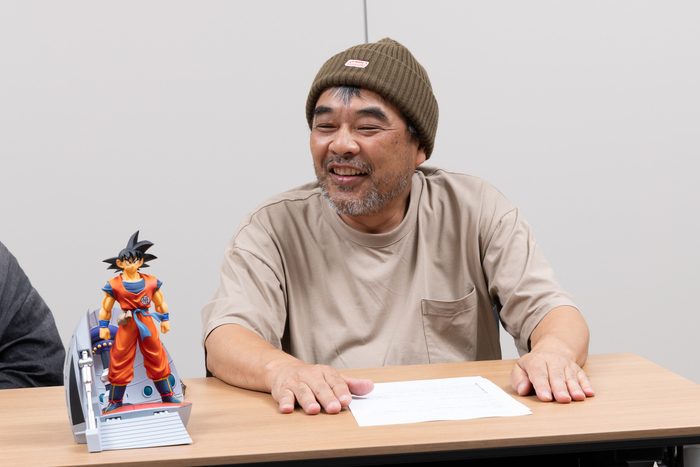
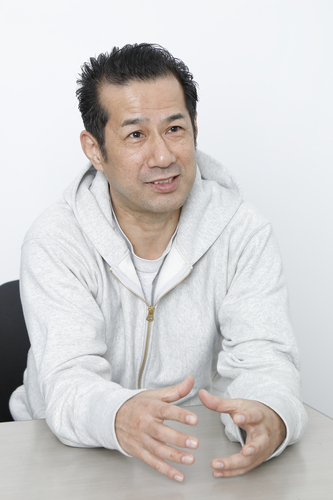
Sculptor: Hiroyuki Nakazawa (STUDIO-REN)
This veteran has over 20 years of experience with designing figure prototypes for Dragon Ball. In recent years, he's been shifting production from traditional hand sculpting to digital sculpting using computer graphics (CG).
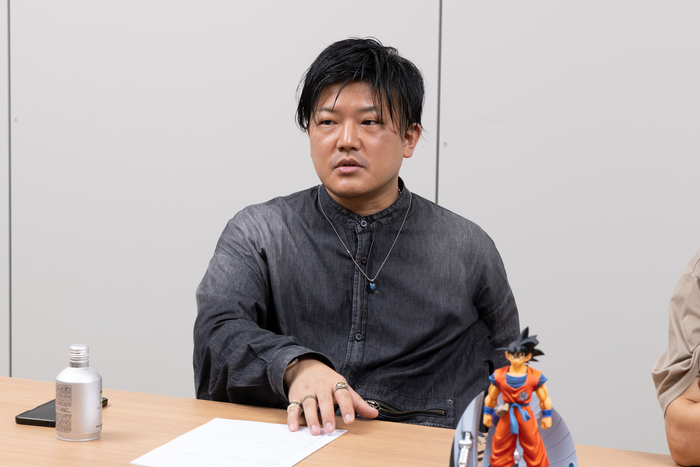
Creative Director: Yusuke Watanabe (WATANABOX)
As the creative director, he coordinates between the various companies involved in the project and the sculptors, ensuring deadlines are met and quality is maintained. Not only does he provide support for the project, but he's also an active sculptor himself. He and his apprentice were responsible for the painting of this figure.
Sculptor: Ren Kato (STUDIO-REN)
Ren Kato is a representative of STUDIO-REN, the company Nakazawa is affiliated with, which consists of multiple members who work collaboratively, with them dividing the work among themselves. Kato was responsible for fine-tuning the CG data for this figure, creating the more subtle details, and rendering the model.
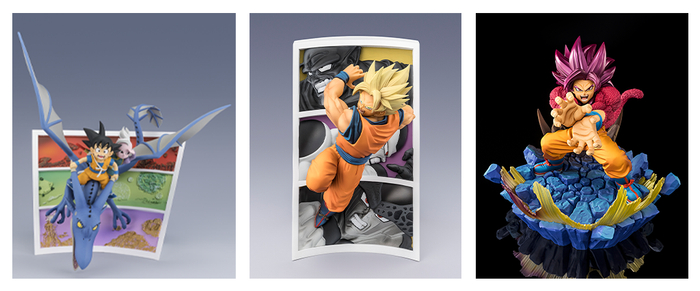
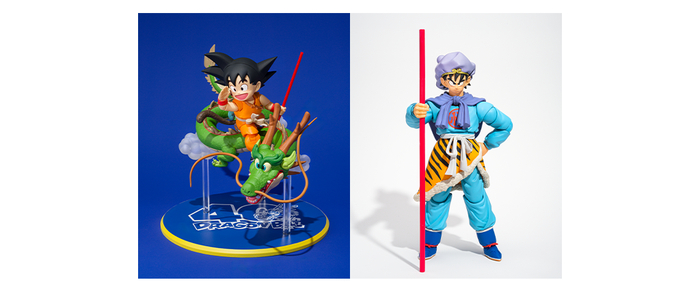
These are some of the Figuarts ZERO figures this same team has worked on in recent years. They've even created some non-poseable items for the S.H.Figuarts series, known for its poseable concept!
Kato is a sculptor who played a vital role in creating this figure. Unfortunately, he was unable to take part in this interview due to scheduling conflicts, so we'll be sharing his comments from an interview that took place at a later date.
About the New Figuarts ZERO Line STARTune
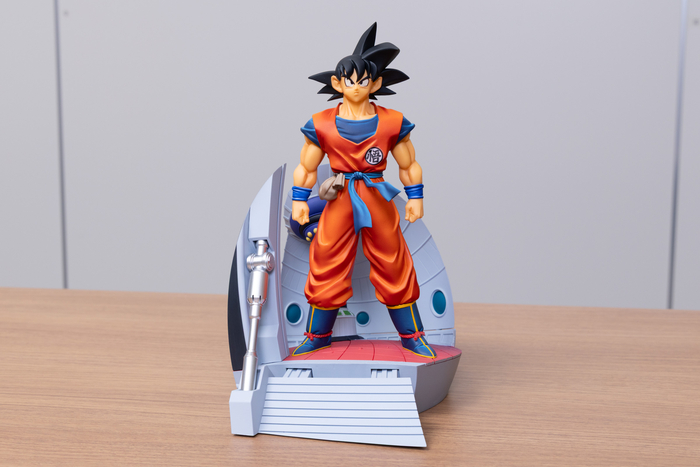
—When you were asked to create a figure for STARTune, what did BANDAI SPIRITS request you to do?
Watanabe: I first spoke to the project lead as the point of contact. They explained to me that they wanted to launch a new figure series. Premium Bandai was selling figures at higher prices, while these would be retailed at under 10,000 yen. While cost was a consideration we kept in mind, we also tried to not be too constrained by it and instead focused on making the best figure we could within those limitations.
—Could you tell us about the process from when you accepted the request to finishing the CG model?
Watanabe: We first received a rough draft of the figure design from BANDAI SPIRITS. We used that design as a reference and discussed what they were looking for with the project lead. Once we were in agreement, Nakazawa, Kato, and I discussed what we wanted the final figure to look like.
Nakazawa: I then created a CG model based on what was discussed. I started by modeling Goku, then built the diorama base, making adjustments to the overall balance while keeping both composition and cost in mind.
[Kato's Comments]
—Could you briefly tell us about your workflow after receiving the data from Nakazawa?
Kato: I first created the rough model data and then sent it back to Nakazawa for him to finish. I was also responsible for separating the model into different parts, printing them, and polishing up the printed parts of the design that were approved by the supervising team. Since several people were involved in this stage of the process, I was also in charge of coordinating.
A Diorama Base Created Without Compromise
—Were there any parts the sculpting team added to the original rough draft?
Watanabe: Actually, the ship's wall at the back of the diorama base wasn't a part of the original rough draft. We got pretty excited while discussing the figure and ended up adding it (laughs).
Nakazawa: We added things because we felt the figure was missing something, didn't we? We weren't even planning on making a cockpit seat (laughs).
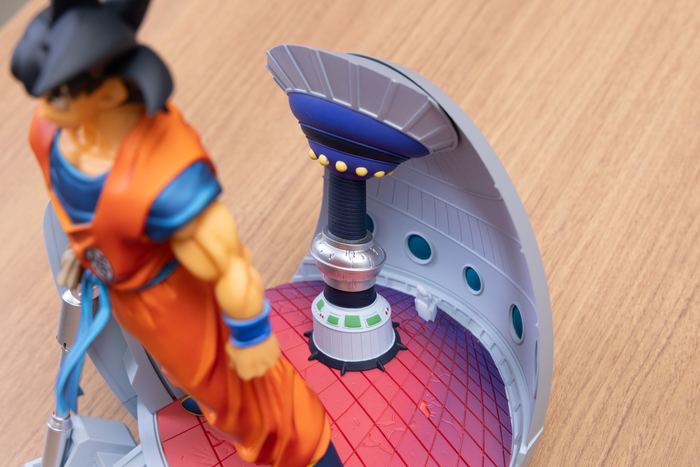
There's a seat in the cockpit!
Watanabe: I think all those back-and-forth discussions we had got us really excited and helped turn this into an amazing figure. Of course, like I mentioned earlier, we couldn't completely ignore the cost, so we continued working on it while consulting with the project lead throughout.
Nakazawa: It's also very easy to omit or scale down elements when working digitally. It's way too much trouble to add something that's already been removed or shaved down when working on things by hand like I used to, so I didn't even consider doing it. But this time, I was able to first build the spaceship wall in an egg-like shape, then cut and add parts until I was satisfied with the composition. Being able to keep the data from the parts I cut away and fine-tune the figure made me realize the advantages of working digitally once again.
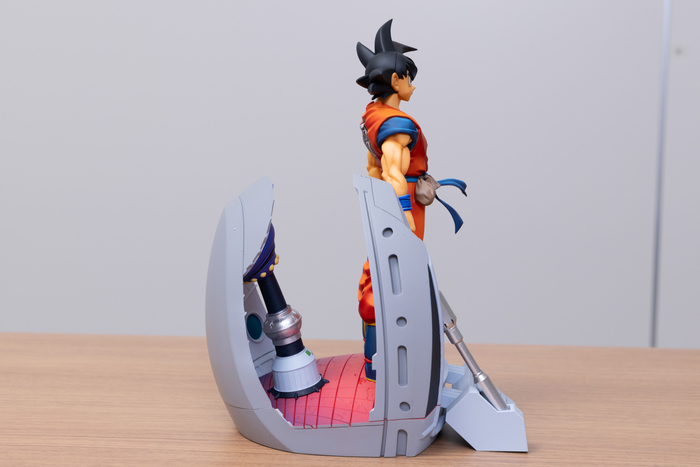
The spaceship's wall and entrance,
created by cutting away sections while keeping its egg-like shape.
—The diorama base really gives the figure a sense of depth in spite of its size. Were there any special techniques you employed to create that sense of perspective?
Nakazawa: I used the floor tile lines I drew based on intuition as a substitute for a perspective grid (guidelines used to maintain a consistent scale) and distorted the cockpit seat and walls to match that perspective. Using perspective techniques too precisely tends to make things look overly rigid or dull. Images with a bit of distortion feel more natural due to how the human eye processes information. I don't think Akira Toriyama used perspective rulers when drawing his manga either, so when I was creating this figure, I went with my gut to stay faithful to the original.
[Kato's Comments]
—Could you tell us about the parts you created with the diorama base (we were told it's a gravity generator) and your impression upon seeing it in figure form.
Kato: I thought it was kind of big (laughs). There tends to be a difference between how these things look when rendered and when they're printed, but I didn't notice too much of a difference this time.
Respect for Recreation and Resistance
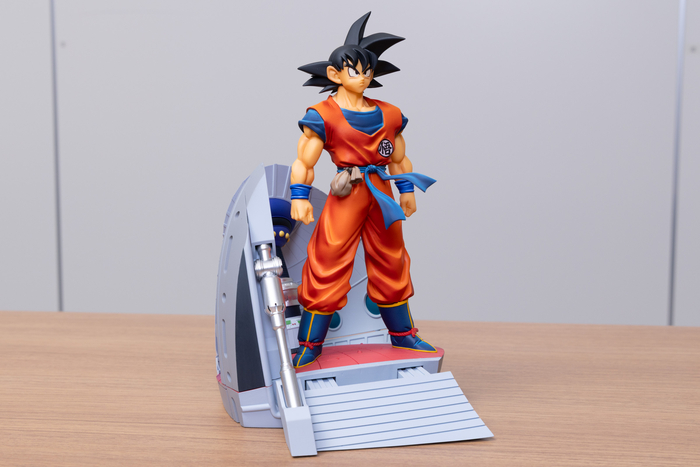
—Let's move on to Goku, could you tell us about what you focused on when sculpting him?
Nakazawa: The thing I remember putting the most work into was the largest and most distinctive tuft of his hair. I consciously styled his hair to jut out like a beak, but I also had to be careful since the direction of some of the tufts of hair were the reverse of Goku's standard look.
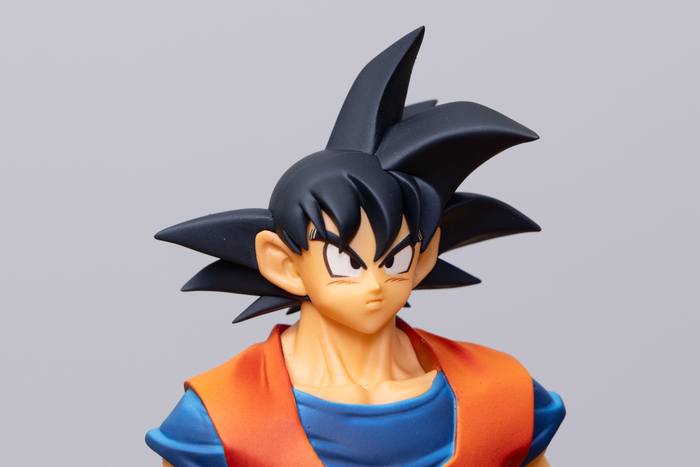
Goku's large tuft of hair typically sticks out to the left,
but here it sticks out to the right.
Nakazawa: Beyond that, I just set out to faithfully recreate the scenes I used as references. Some parts would not translate well into figure form if I were to perfectly recreate how they look in the series, so I recreated it faithfully first, then gradually made minor adjustments afterwards.
Watanabe: Speaking of which, when the supervising team gave us instructions to make the symbol on the back of Goku's uniform a perfect circle, I pushed back. Even though it's portrayed as a perfect circle in the series, hand-drawn lines have subtle distortions in them. If we're converting it into a figure form, the symbol should really be oval shaped since the fabric is stretched out slightly by Goku's bulging back muscles. I explained this reasoning as a prototype sculptor and managed to reach a compromise that everyone could agree on.
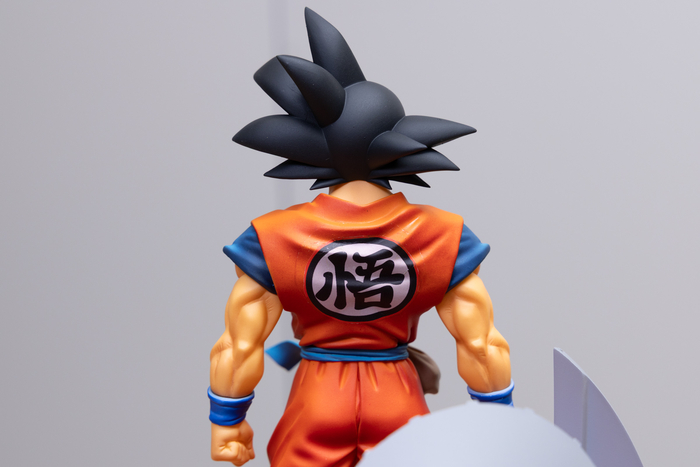
The symbol on Goku's back
—Are there any differences in the production process between figures that come with a diorama base and ones that are standalone?
Watanabe: Diorama bases are often curved to create a sense of depth, and that was the case here too. Due to that, I was careful to adjust the points where the base and the character meet. It might be obvious, but my impression is that products with character's feet floating in the air aren't exactly in short supply.
Nakazawa: Since we made Goku stand flush with the curved ground, he isn't standing perfectly straight. I just had to make a few little tweaks here and there so the figure wouldn't feel off. I didn't really put that much work into the adjustments (laughs), but I do feel like I was able to make it look relatively smooth, intuitive, and natural.
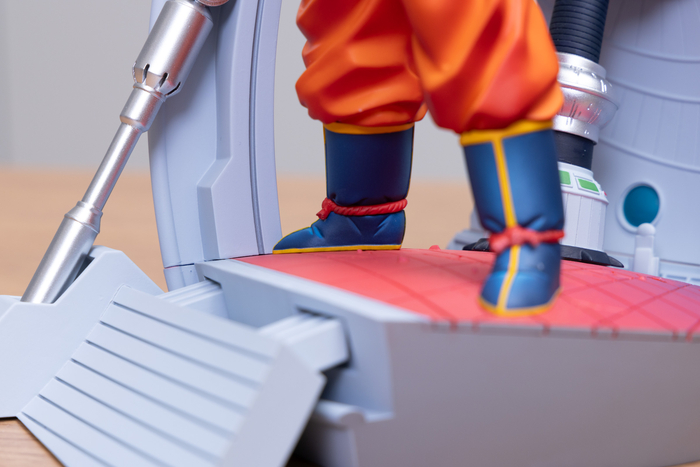
Goku's feet are firmly planted on the ground.
[Kato's Comments]
—It's my understanding that you were asked by Nakazawa to adjust Goku's shoulders and waist. Could you tell us about what you focused on during your assessment of the figure, such as faithfulness to the series, data consistency, and overall balance?
Kato: This is a vignette with a sense of depth, so I was careful to apply perspective while making sure the figure still looked natural, that it matched the look of the original illustration overall, and that parts that aren't visible in the illustration remained consistent.
—To wrap things up, could you please share a message for all the fans who are looking forward to this piece?
Watanabe: I think it's very impressive how much attention was put into the coloring and gradient of the base, considering its price. I believe fans of the Figuarts ZERO series will be quite satisfied with the final product.
Nakazawa: Even with the series being more affordable than ever, as a prototype sculptor, the policy has always been, and still is, to create high-quality works regardless of retail price. I find myself thinking, "Everyone should save up their money to buy one" (laughs). That said, it's an absolute pleasure to see more people have the chance to get their hands on one of these pieces. I hope everyone will like this figure with the diorama base when they decide to get it!
[Kato's Comments]
—Can we get a message for the fans?
Kato: It isn't just the character that's been crafted with meticulous detail, but the base as well. So, I hope those who get one will take a moment to check out every aspect in close detail. I also hope everyone will enjoy Nakazawa's beautifully rendered perspective model vignette.
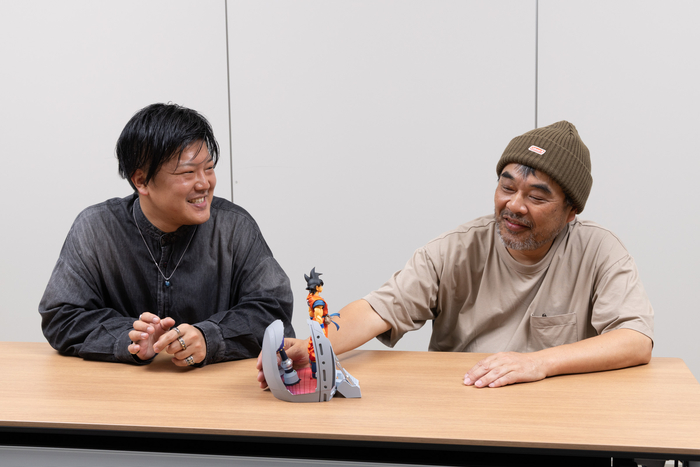
From the makers behind a number of previous figures, Figuarts ZERO [STARTune] Goku -Stepping Onto the Battlefield- is the first entry in a new collection, all while maintaining the high quality that the series is known for! For more details and pre-order info, check out the official TAMASHII NATIONS site!
https://tamashiiweb.com/item/15909/
SHARE
This site includes machine-translated texts. Please be aware that you might find some unusual expressions that are difficult to understand.